>
Showing posts with label Fashion. Show all posts

Vintage Equestrian Sewing Patterns

June 06, 2018
•
I have quite an odd vintage sewing pattern collection of old buckaroo shirts, flared breeches, and - my favorite - western equitation suits. I get emails all the time asking where people can find similar patterns, or what pattern companies they should be looking for.

I find patterns on eBay and Etsy, primarily, though some of the newer pattern reproduction companies have plenty of interesting offerings, often with much better sizing and instructions than the originals.

Lola Gentry Originals

When I was a kid, Lola Gentry Originals were the be all end all of sewing patterns for show moms. Imagine, you could walk in a western wear or tack store, and they stocked Lola Gentry patterns just as casually as JoAnn's carries Butterick and McCall's. For years, Western Horsemen carried Lola Gentry Originals ads in the back of their magazine, where you could physically mail green money to an address and wait for your pattern to come in the mail. Crazy, right?
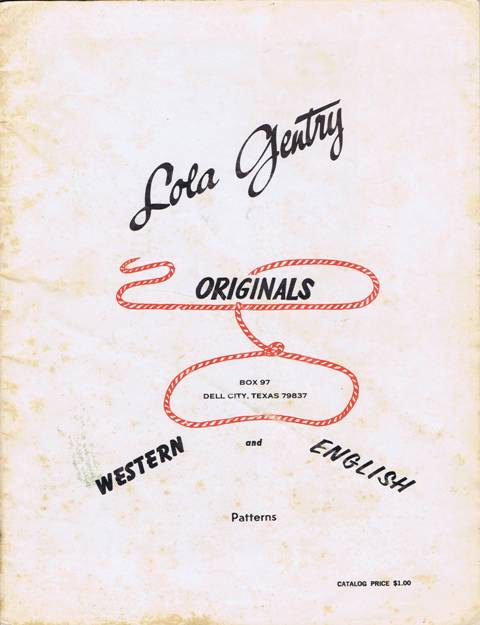
Lola Gentry Originals pattern catalog
Lola Gentry Originals Pattern Catalog. Photo: Pinterest

I don't know how many patterns Lola must have sold back in the 60s and 70s, but everyone I knew that sewed had at least one. The one-piece double knit polyester equitation suit was the A#1 hot shit back in the day, and that pattern came from none other than Lola Gentry. It was the holy grail of patterns, right down to the authentic keystone belt loops and a big ole pointy collar.

I'm getting misty.

Anyway, I spoke to Lola herself several years ago - just the sweetest lady - and she was kind enough to print me off one of the original one piece equitation suit patterns. I have yet to find a double knit polyester worthy of the pattern, but it's on my bucket list.

Lola Gentry passed away in 2016, but Walker's Western Wear of Arizona still offers the majority of her western wear pattern lineup, plus her English shirts, breeches, jods and jackets. I'm joyful Lola's patterns are still available to the next generation, even if double knit polyester isn't the fabric of choice.

Jean Hardy Patterns

If Lola Gentry Originals was Coca-Cola, then Jean Hardy was Pepsi. I don't know much of the backstory on Jean Hardy, but the company had an extensive catalog of western wear, jackets, blouses, vests, chaps, English attire, and even sportswear. Jean Hardy patterns were printed on heavy paper and packaged in oversize envelopes in their trademark orange, white and blue - you couldn't miss them.

Like Lola Gentry, Jean Hardy offered both a one-piece and two-piece equitation suit that was made and remade for years by all those talented sewmoms; big collars, long zippers and keystone belt loops in every conceivable color and pattern. Add a bright felt taco hat and some pointy-toed Tony Llamas and you were the belle of the ball.
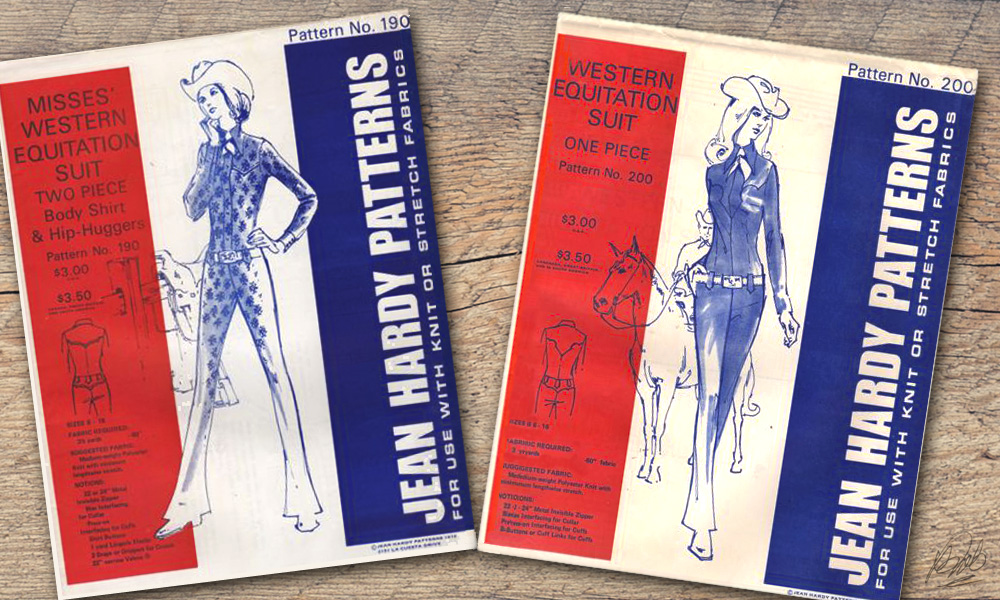
Jean Hardy equitation suit patterns
Vintage Jean Hardy #190 and #200 equitation suit patterns.
Jean Hardy, a California company founded in 1971, disappeared off the radar in the past few years. Patterns can still be found online through avenues like eBay, Etsy, and vintage OOP (out of print) pattern resellers. Expect to pay upwards of $30 or more for an uncut pattern, so grab any bargains you find before they become rare as hen's teeth.

Authentic Patterns

Along with a staggering lineup of square dancing patterns, Authentic Patterns, Inc. of Forth Worth, Texas was another popular source for western jackets, pants, tops and even chaps. Like Jean Hardy, Authentic Patterns was fond of oversize envelopes, as their patterns were printed on heavy paper to be traced and re-used.

One of my favorite things about Authentic Patterns is they sometimes featured large photographs on their pattern covers at the zenith of cheesy western fashion. Gals with big hair, big fannies and big thighs, with occasional bulges and pantylines. Long before the days of Spanx, they were using real size models real size gals can identify with. A stroke of marketing genius, it was.

I sewed a pair of western pants a few years back using Authentic Patterns #230. Imagine my surprise when the unaltered pattern actually fit my big rear and thighs like a glove, without looking obscene. In all the years I've been sewing, that's the first and only time that's ever happened. Ever since, it's my go-to show pants pattern, and possibly my favorite pattern of all time. The keystone belt loops only make it that much better.
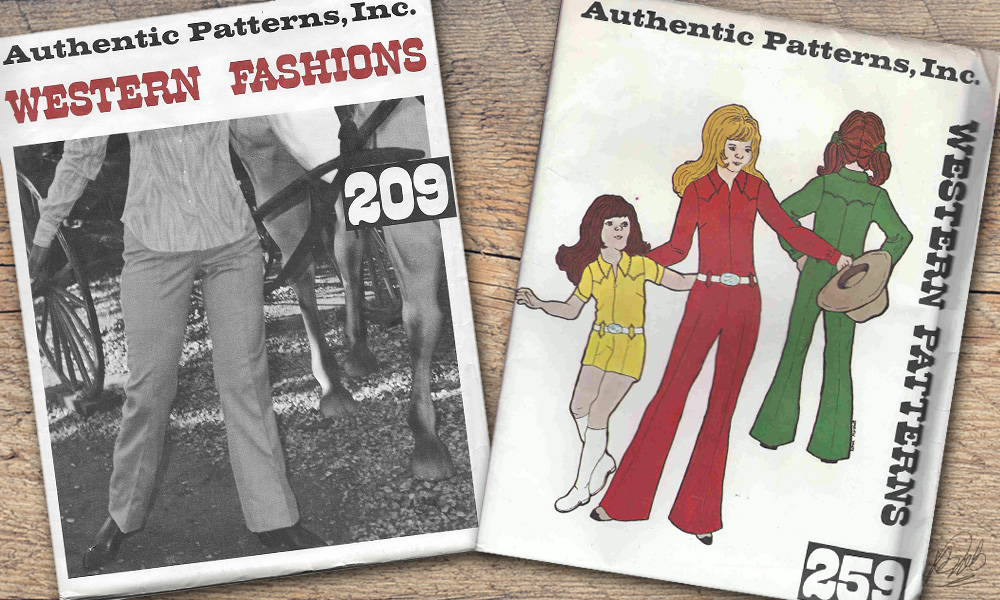
Authentic Patterns, Inc. Western Patterns
Authentic Patterns, Inc. #209 and #259
In my experience, there's little room for error on measurements with Authentic Patterns. They are not sized generously, so make allowances when shopping your size. If in doubt, consider sizing up.

Authentic Patterns is another gem that went the way of the dinosaur. I've found several on eBay and Etsy, but every year the pool of remaining uncut patterns gets smaller.

Vintage Reproductions

Several pattern companies have carved their own niche offering vintage reproductions, complete with improved and expanded pattern instructions, fabric recommendations, and handy hints regarding historical construction techniques and whatever oddball notions you may need.

Mrs. Depew has a stunning vintage riding coat pattern and a vintage flared breech pattern that I love, love, love! for less than $10 each. Patterns are offered as downloadable PDF files for printing. Mrs. Depew patterns are also available through their Etsy store.
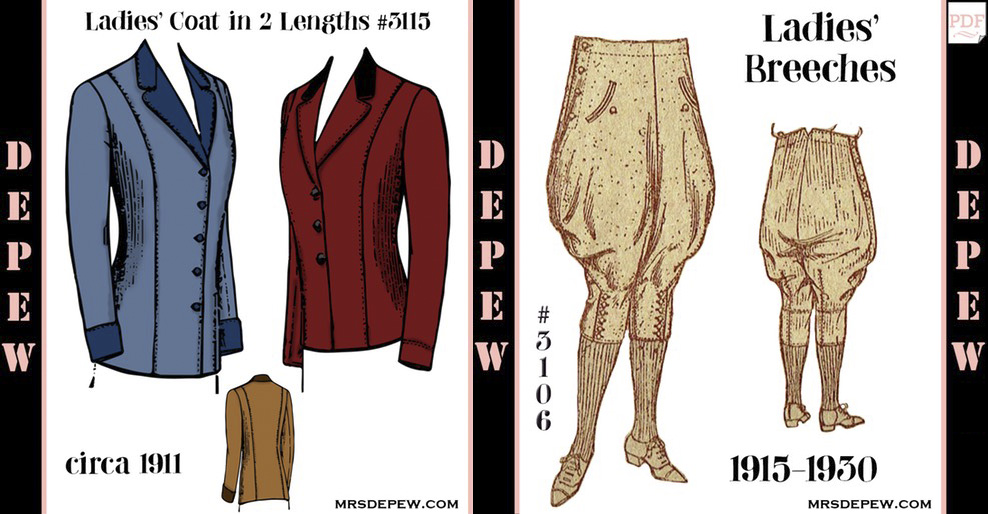
Mrs. Depew vintage style sewing patterns


Reconstructing History
is so doggone awesome they have an entire category dedicated to equestrian patterns. Vests, jackets, breeches, riding skirts - they have it all. You can order printed paper patterns or downloadable PDF files. Prices vary, but most patterns run $15-16 and under.
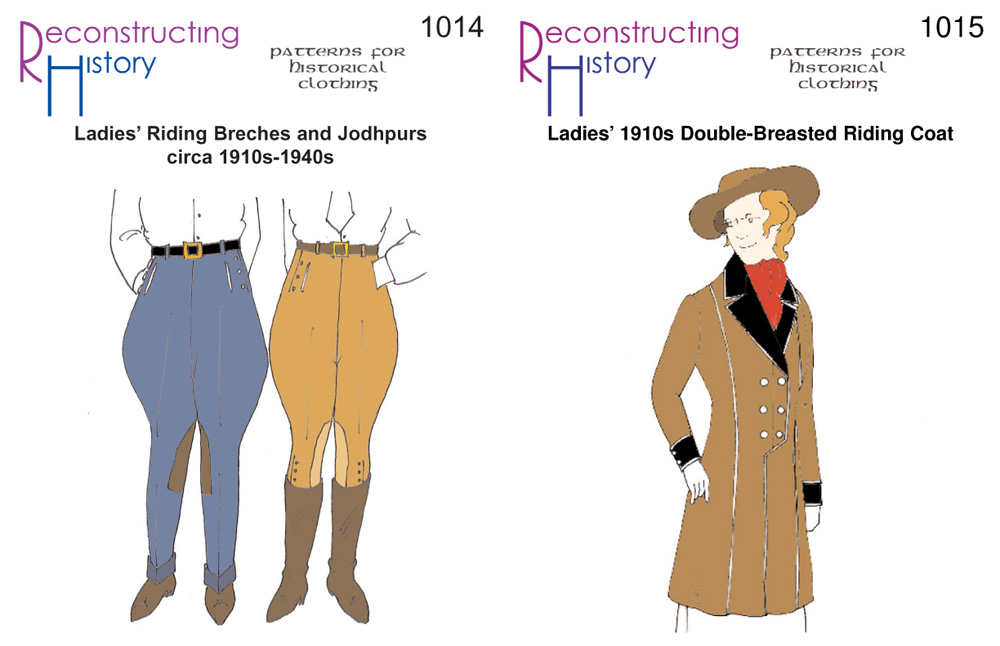
Reconstructing History patter
A terrific breeches and jods pattern, and one of many fashionable riding jackets from Reconstructing History.


If you're going to strum your geetar on the lone prairie, you can outfit yourself in style with patterns from Folkwear. They carry patterns for western shirts, riding skirts and several jacket styles for $20 and under. Their pattern illustrations on the website are beautiful, so expect to spend some time browsing through their other styles.
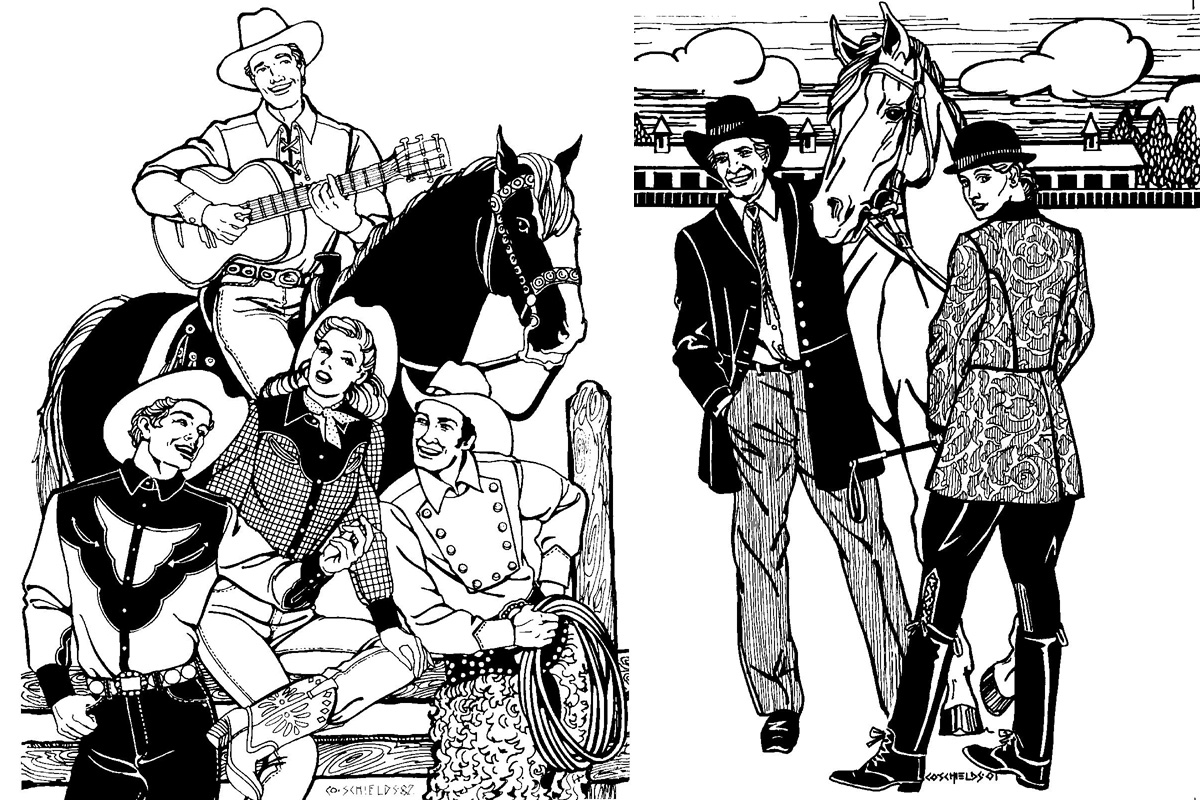
Folkwear patterns
A versatile western shirt pattern and frock riding coat for men and ladies from Folkwear patterns.

Buckaroo Bobbins offers a Saturday Matinee pattern for guys and gals with all the important details of  retro western wear, including smiley pockets, extended cuffs and even embroidery instructions. This is a shirt that could easily be dressed up or down, and could make a phenomenal custom ranch riding blouse with mix 'n' match custom fabrics, piping or embroidery. Priced around $15, there's even more prairie goodness to be found at the website.
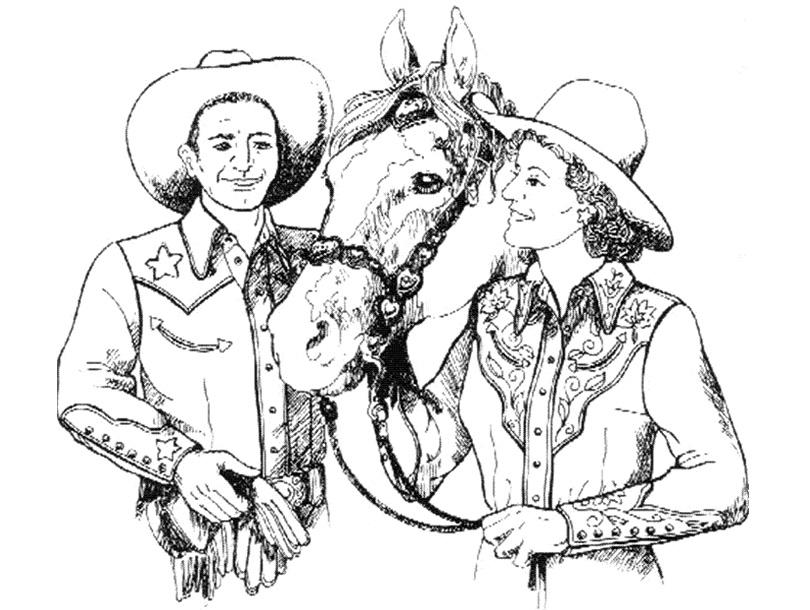
Saturday Matinee shirts by Buckaroo Bobbins
Retro as it gets, the Saturday Matinee shirt from Buckaroo Bobbins.


Saundra Ros Altman's Past Patterns is a treasure trove of historical designs from the 1800s through the past century. For re-enactment or costumes, this site offers something for everyone.
What Makes It A Hunt Coat?

June 03, 2018
•
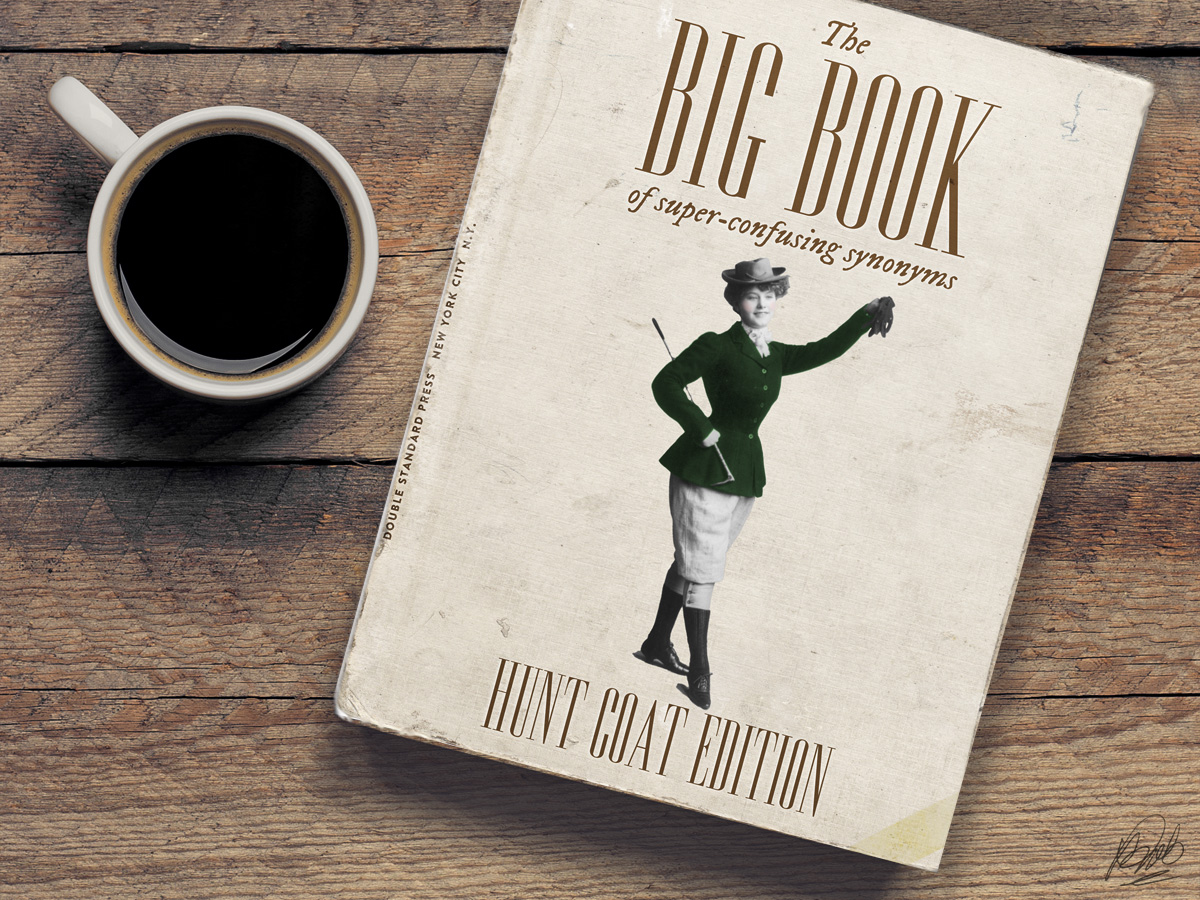
big book about hunt coats
If you are new to showing a stock breed horse in hunter under saddle (HUS) or hunt seat classes, you're likely looking for a hunt coat. With names like show coats, competition jackets, riding jackets, hacking jackets, etc., it's no wonder people feel confused about the exact definition of a hunt coat.

If it's called a hunt coat, is it always a hunt coat? Usually. Is a show coat a hunt coat? Could be. Is a competition jacket a hunt coat? Sometimes. Is a riding jacket a hunt coat? It depends. The labels are applied so arbitrarily as to be interchangeable, even by the manufacturers.

Paint, Pinto, Quarter Horse and Appaloosa rules don't vary a lot where hunt seat attire is concerned. Even at the open show level, the stock breed standards carry over fairly consistently. For simplicity's sake, let's refer to what the [2018] AQHA rulebook says:

SHW320.3 In all English classes, riders should wear hunt coats of traditional colors such as navy, dark green, grey, black or brown. Maroon and red are improper. Breeches are to be of traditional shades of buff, khaki, canary, light grey or rust (or jodhpurs), with high English boots or paddock (jodhpur) boots of black or brown. Black, navy blue or brown hard hat (with harness for youth in any over fence classes) is mandatory. A tie or choker is required. Gloves, spurs of the unrowelled type that are blunt, round or that include a smooth rolling ball and no longer than one inch and crops and bats are optional. Hair must be neat and contained (as in net or braid). Judges must penalize contestants who do not conform.

The term "hunt coat" is actually rather vague in the rulebook. What is acceptable is predicated on what's currently passing as acceptable in the show ring. If you're fortunate enough to have a trainer or show friend guide you, you're well on your way to dressing the part. A reputable clothier can put you in what's correct, and what fits and flatters within your budget. Attending breed shows, reading breed magazines and participating in horse show forums are excellent resources to see real world examples of winning turnouts.

Hunt Coats

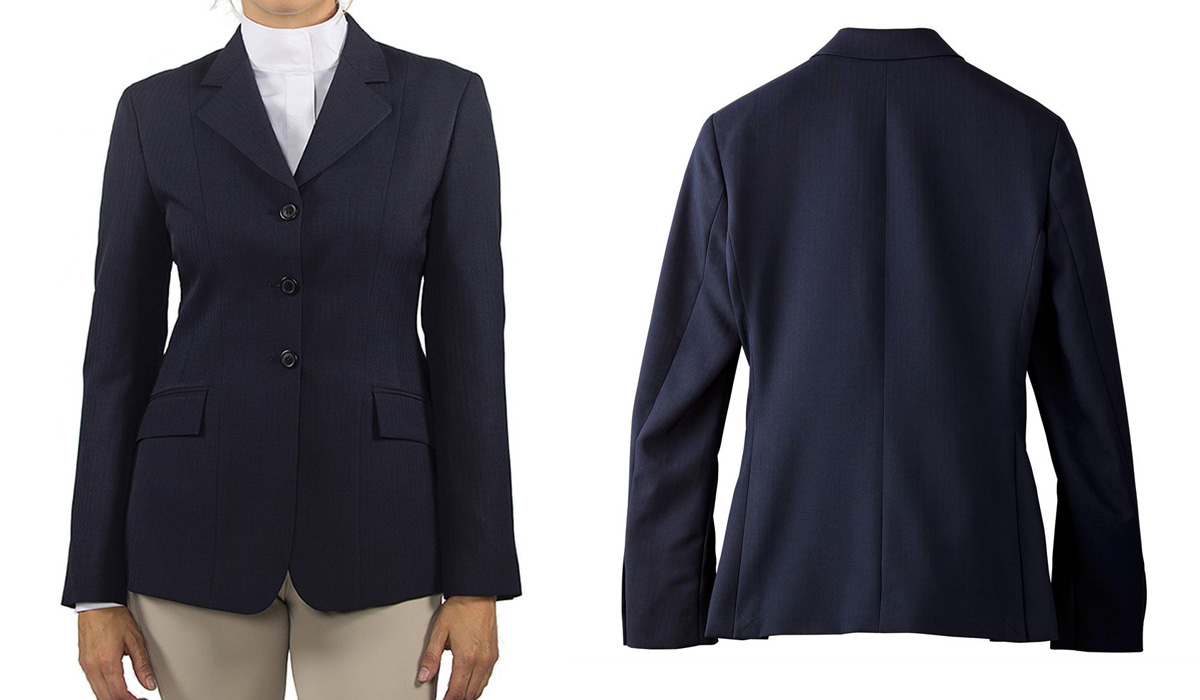
The style seen most often and accepted as proper in the stock breed show world is a 3 button, double vent back coat whose hemline ends approximately at your crotch, give or take. The coat's back length must not be so long you sit on it, nor so short your fanny isn't covered. Hunt coats have collars and lapels. The bottom of the lapel - the roll line - should begin no lower than your underarm and above the bustline. Solid navy, solid black, subtle pinstripes or herringbone weave over navy or black are the safest bets. If not wool, the fabric should be a wool blend or suiting fabric that appears like wool. Shiny, polyester and synthetic fabrics are typically a poor choice. Buttons should not be glitzy or loud, often solid color that match the coat fabric. Tailoring must be impeccable. Princess seams, two-panel sleeves and full lining are standard. Sleeves that are too short, baggy sleeves, baggy waists, too tight across the bust, back or shoulders are big no nos.

classic hunt coat
R.J. Classics Devon Show Coat in navy herringbone is a safe, conservative, classic choice for stock breed classes.

Hunt Coat Variations:
Beyond the safe bets (above), competitors have expressed their style and individuality with bolder fabric and color choices, including velvet/colored collars and accent piping. Within the acceptable color spectrum, tone-on-tone stripes, checks and subtle plaids are very on-trend and seem pretty well tolerated at the breed show level. In equitation and horsemanship, the safe bets are by far the most popular, while the variations are more commonly seen in pleasure classes.

hunt seat jacket variations
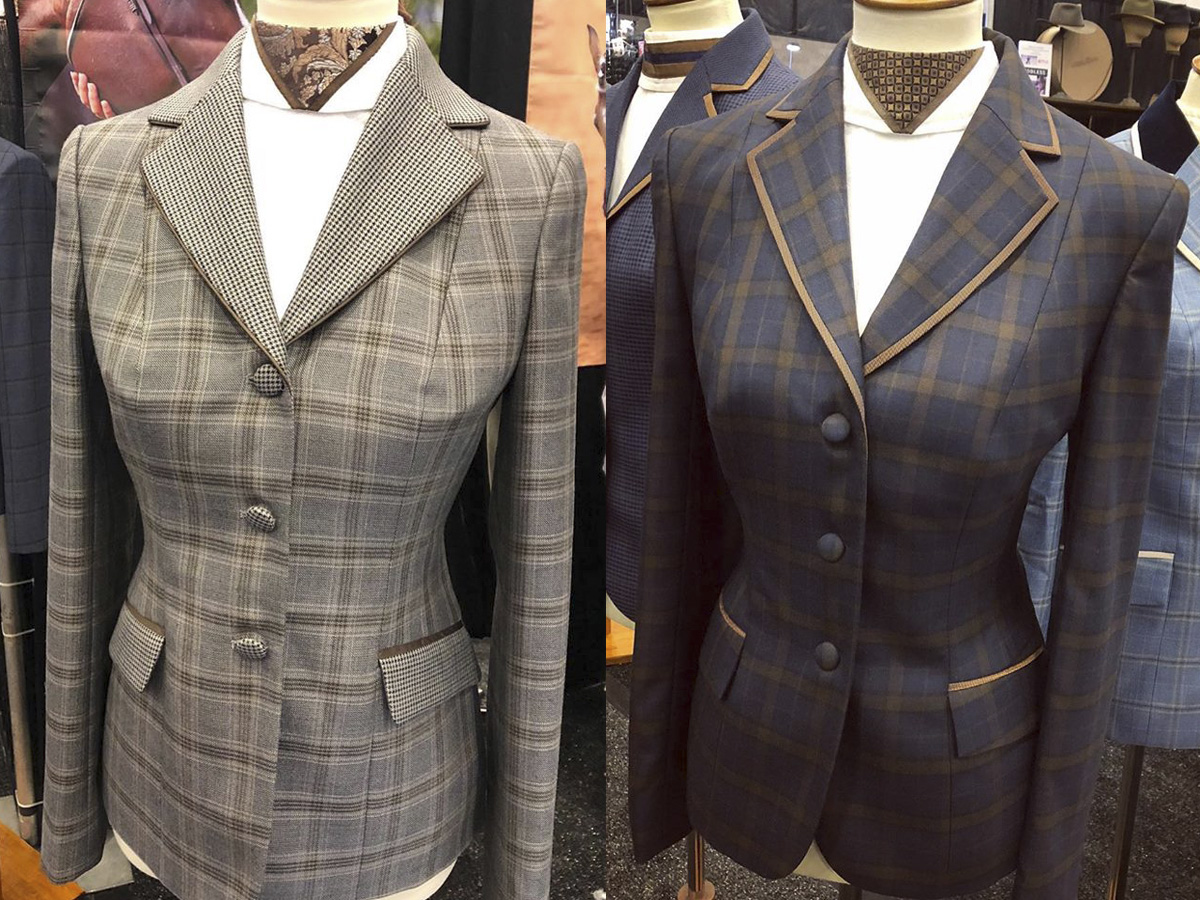
Custom jackets like these from Custom Collars Boutique offer fabric combinations and designer details that allow hunt seat riders to express their unique sense of style and coordinate every aspect of their presentation.
The Arabian crowd has really pushed tradition with trendsetting hunt seat attire. You'll see outright fashion colors, more decorative trims and details, and beautifully coordinated ensembles from head to toe. While I admire many of the outfits from a fashion standpoint, the identical turnout might go over like a lead balloon in the stock breed show ring.

Competition Jackets

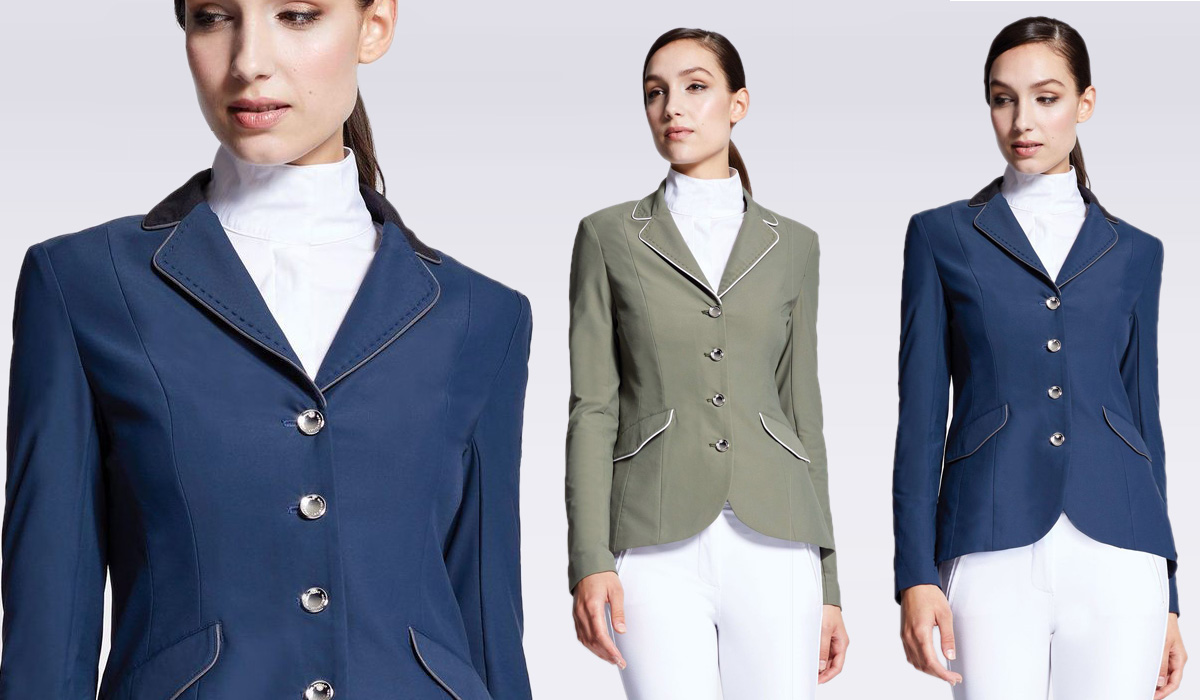
Competition jackets feature updated hunt coat styling with European details; typically shorter length, trimmer through the body, often made with washable and stretch/technical fabrics. Details might include collar style variations, piping, decorative topstitching, pick stitching, contrast stitching, zipper pockets, and any variety of button styles, not to mention a rainbow of fashion colors. Several competition jackets could cross over well to stock breed hunter under saddle events, but they're generally designed for open jumping and eventing competition where European fashion has explored less conservative interpretations of traditional styles.

competition jackets
Noel Asmar Equestrian Competition Jackets feature fashion colors, 4 bright buttons, piping and collar detailing. The length is shorter, and the cut is trimmer than most hunt coats. Technical fabrics afford freedom of movement, comfort and washability.

Show Coat

See Competition Jackets, above. Generally, tamer and more conservative than competition jackets. Depending on length, style and color, they may very well make an acceptable hunt coat.

Riding Jackets

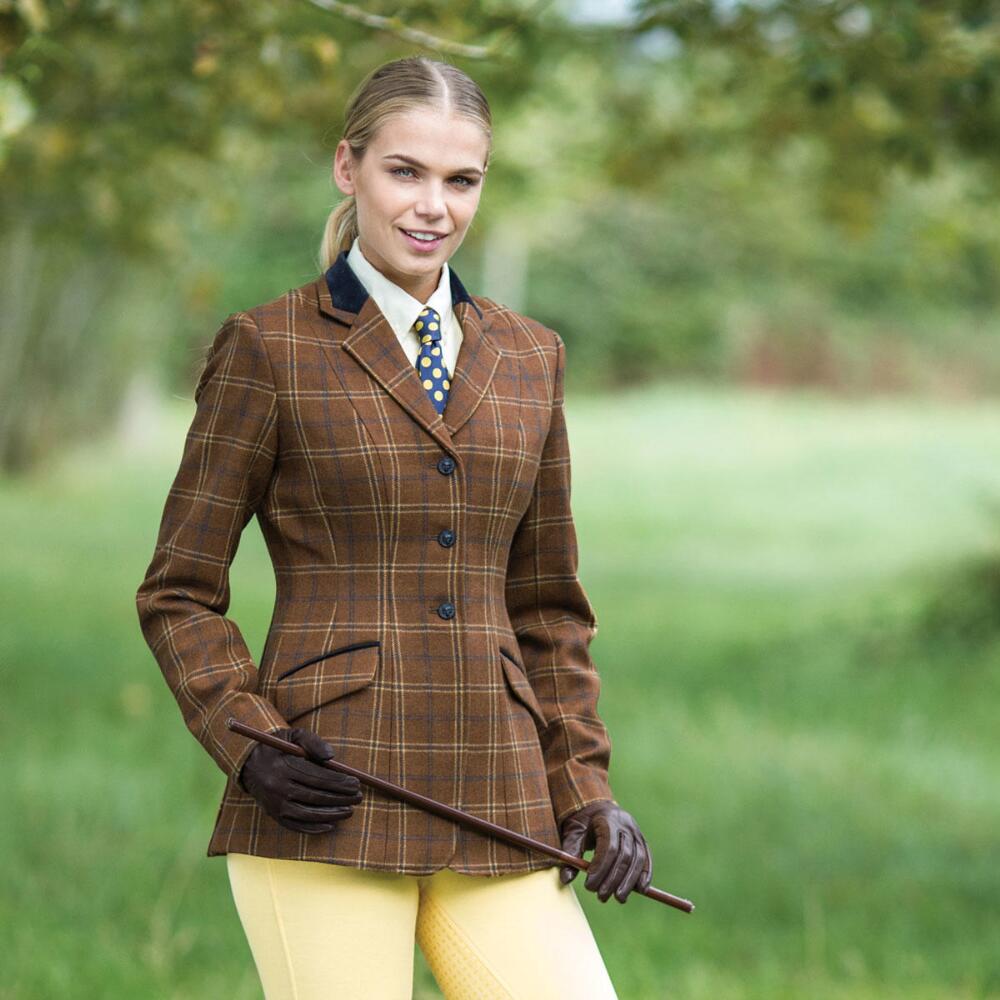
Riding jackets run the gamut between very conservative and traditional to sportswear styles. Riding jackets are often tailored with single vent backs, in longer lengths, sometimes longer lapels, and 3 or 4 button fronts. They come in solids, plaids, tweeds, heathers, houndstooth, and other color and pattern details that set them apart from standard issue hunt coats. Ironically, many of these are made by centuries-old - even famous - fashion houses in England and Europe, who happen to know a thing or two about "proper" English attire. In the stock breed hunt seat ring in America? Nope, not proper. Freedom fries!

riding jacket
Equetech Marlow Deluxe Tweed Riding Jacket offers the cut of a hunt coat with more pattern and color.

Hacking Jacket

See Riding Jackets, above. Often shorter lengths, closer to a hunt coat. May have double or single vent back, 3 buttons or 4.

Frock Coats

Wildly popular in Victorian and Edwardian fashion, frock coats were often worn as riding and foxhunting jackets back in the day. While still seen foxhunting, today they're more often associated as dressage or "Olympic" jackets here in the States. With new rules in dressage competition, the basic black or dark blue frock coat has been reinterpreted in a myriad of colors, cut, and detailing, including luxury accent fabrics and even rhinestones. While a solid color, 3 button, shorter length frock coat might squeak by in hunter under saddle classes, it may not be considered traditional in the eye of some judges. History says otherwise, but history isn't deciding who gets the ribbons.

frock riding coats
(Left) Equetech Ladies Keeper Frock Riding Coat, 3 button style with double vent back (discontinued). (Right) Vintage Jean Hardy English Riding Jacket / Olympic Frock Coat pattern; 4 buttons, single vent style, darts in front and princess seams in back.

Wear It Well

Whether you play it safe with a black or navy hunt coat or get a little more adventurous, make sure your jacket fits properly. Have friends snap photos from front, back, and side when you're in the saddle to determine any problem fitting areas. If need be, take it to a tailor to get the look of custom for a fraction of the price. If you're shopping second hand, especially with growing children, remember buttons can be updated and velvet added to collars relatively easily. With a good, basic jacket that fits well you can still look every inch the part until you're able to upgrade or step up to custom made.


Sew Your Own Custom Hunt Jacket: Pre-Planning

June 01, 2018
•
I've been sewing and altering my clothes for decades, but I don't consider myself any kind of tailor. Sure, I know my way around a sewing machine, but as far as couture techniques, draping and grading, no. In fact, I don't even like zippers.

I hate hand sewing, welt pockets, linings, and making buttonholes. Can I do those things? Certainly, and I have, but I don't like doing them. I'm more of what one would call a quick 'n' dirty sewer. If there's a hack or shortcut, I'm on it.

The reason I made so many of my own show clothes is because I am hard to fit, and in the horse world I'm comparatively poor. Even when I'm not-so-poor, I'm still cheap because I'm wired to think like a thrifty person. Since I'm built for custom made and a creative sort, it just always seemed better to sew my own.

My fitting issues: Looooong back, short arms, busty, small waist, big booty, long thighs, short legs, tiny head, tiny feet. Fact is, I'm built like a dachshund. Or a T-Rex. Or something designed by committee.

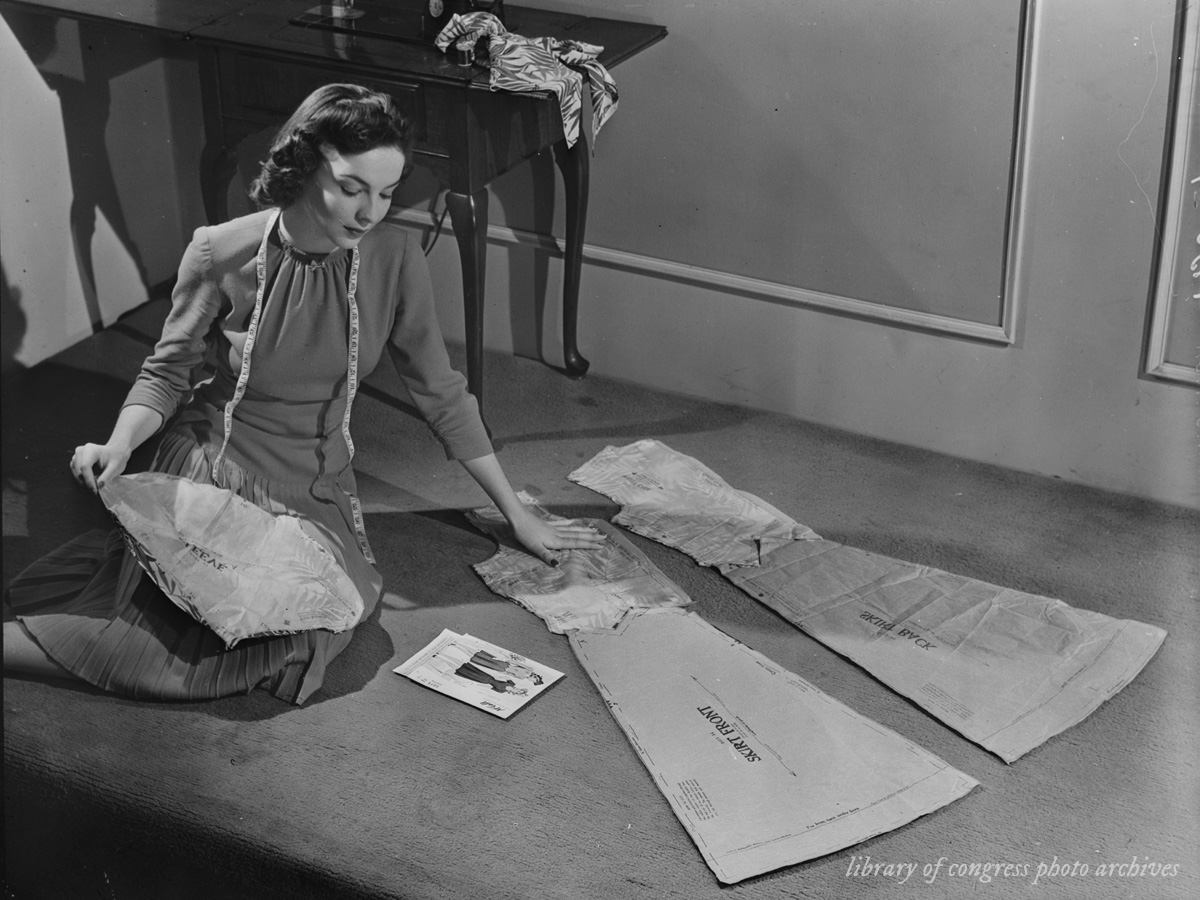
vintage pattern layout
She's smiling because she didn't have to bust out extra paper and a roll of Scotch tape to add 3" to her back waist length. She's also reading her pattern cover from 3 feet away without glasses. #NotRealLife
Off the rack jackets fit like a joke, no matter the price point. Tight through the back, tight in the bust, baggy at the waist, too long in the arms, and the waistline sits just above my last rib, acres above my real waist. Sure, I could alter something, but that involves picking out stitches and linings, and then there's usually a welt pocket parked right in the middle of a seam I need to reduce.

welt pocket seam
Reducing a seam that intersects a welt pocket? Nope. I'd rather put forks in my eyes.
I have three such jackets hanging in my closet, ranging from almost-fits to WTF was I thinking? They're waiting for complicated alterations I can't face beginning. Linings, welt pockets… ugh.

Honestly, it's easier to make my own. Obviously, not easier than handing someone a wad of cash for a custom, but easier than trying to make something work that doesn't work that I'm never really happy with.

I've been fancying the European competition jackets. I like the technical fabrics, the washability, the overall cut, and details like piping and velvet. What I don't like is the often haphazard topstitching over squidgy polyester, sometimes so crooked you'd swear it was sewn by Stevie Wonder. I dislike the gaping buttonholes and wobbly buttons. As even a half-assed seamstress, I notice those things and it really bothers me. Be damned if I'd pay for it, let alone the prices for brand name stuff made in China. In that respect, I'm very much a traditionalist. Besides, my elderly aunt would beat me senseless if I made something that sloppy. "It's just not done that way."

hunt coat pattern choices
Narrowing down my pattern choices. Olympic style frock coat or mod a tailored jacket pattern, or something else entirely? Whatever pattern I choose, it will take plenty of pattern alterations to truly fit.
I've read endless discussions on forums about what's in and what's out in the HUS show ring, how judges "hate" this or that, and I've grown immune. I mean, if you're riding the A circuit on the east coast or qualifying for the AQHA World Show that might apply, but it really doesn't affect me either way. I show locally, I like what I like, try to kinda/sorta color between the lines, and that's as much worrying about offending anybody as I have energy for.

If my coat isn't melton-y enough, plain enough, black enough, navy enough, long enough, too short, has four buttons instead of three - is it really the end of the world? Am I really taking that much of a dump on tradition? Is it such an affront to the senses I should be flogged, disqualified, lead my horse out in shame?

I could go the safe route, and create a navy or black jacket that would never offend anyone. I could even push the boundaries with dark brown or green; three button front, double vent back, and call it good.

3 conservative hunt jackets
(Left) Traditional bottle green jacket by Moore's Riding Wear, New Zealand. (Center) R.J. Classics very safe, very conservative, very traditional show coat in navy. You can't go wrong at any show, any level, with a tailored navy show coat in your closet. (Right) Tone-on-tone black plaid is still far from rebellious, though not as conservative as solid black. Images: Pinterest.
Frankly, if I'm going to make something, I'd like it to be just a little more exciting. A little color, a little texture, something not so dry white-toasty.

3 interesting hunt jackets

(Left) Winning Couture brown check plaid with white piping and perfectly paired custom shirt might not be considered conservative or necessarily traditional in some circles. Personally, I think it's classy and beautiful. (Center) The Arabian crowd constantly pushes the envelope in hunt seat show attire with fabulous, fashionable turnouts. This yummy, plummy brown and tan check with coordinating custom shirt by Show Season is still quiet and elegant, but perhaps not traditional in the purest sense. (Right) Peach piping adds a fun twist on traditional dark gray pinstripe from Winning Couture. This is just a tiny bump beyond conservative, and could easily dress up or down depending on which shirt is worn underneath. Images: Pinterest.
Once I have the fabric, color and pattern figured out, there's the question of how many buttons. Generally, in stock type Hunter Under Saddle you're only going to see 3 button fronts. In America, 3 button fronts are typically associated with hunt seat and 4 button fronts with dressage jackets. Worldwide, that isn't the case, but here in the States that seems to be the unwritten rule. Who wrote the rule? Somebody with a button hangup. Somebody who chases "those young whippersnappers" off their lawn and counts people's buttons and hits children over the back of the hand with a ruler, that's who.

With my long torso, I can easily wear 4 buttons. Or a dozen. Also, 4 buttons help keep the girls in check without gaping between buttonholes. I'd like to avoid wardrobe malfunctions if at all possible.

4 button riding jacket
OMG! A riding jacket with 4 buttons can't possibly be a hunt jacket, right? Call the button police! This beautiful jacket made by Moore's Riding Wear in New Zealand.
I love the cut of frock coats too, but here in the USA frock coats are generally dressage attire. Historically, frock coats weren't uncommon in the hunt field, but the stock breed show ring ain't the hunt field, no matter how traditional they pick-and-choose to be.

3 hunt coats
Will the "authentic" show coat please stand up? Three lovely variations of hunt-type jackets. Left: Equetech Marlow Deluxe Tweed Riding Jacket, specifically a "hacking" jacket cut on traditional lines with double back vents over honest-to-goodness canary breeches. Top right: Equetech Ladies Keeper Frock "Hunt" Coat with 3 button front and double vent back (discontinued). Bottom right: Ariat Bronte Show Coat in a very safe navy color with - gasp! - a 4 button front and the preferred double vent back.
We've evolved from tube radios, drive hybrid cars, have dishwashers, wear Spanx, have 24 hour mascara, use penicillin, inject Legend, love memory foam knee rolls… I think there's a little wiggle room, or should be, where tradition is concerned. I'm not saying let's turn stock breed HUS into Comic Con, but it's time to let go of some hangups.

I'm more concerned about sloppy equitation, to be honest. My own, in particular.

If I have a good trip in the show pen and feel like I looked good, that's what I'm in for. Just maybe, if I feel like I look good, I may ride better.

I think a new jacket that fits would make me feel better. I already know the ill-fitting stuff hanging in my closet makes me feel sad and guilty, and who needs that? Who needs to dedicate 10 linear inches of closet space to that kind of negativity?

I need some chocolate cake to ponder which pattern I should use, which color, how many buttons, and how far on the fringe is too far. What I know for sure is jackets that don't fit make me feel bad and chocolate cake makes me feel good.

My Closet is Like Noah's Ark: Two of Everything

May 25, 2018
•
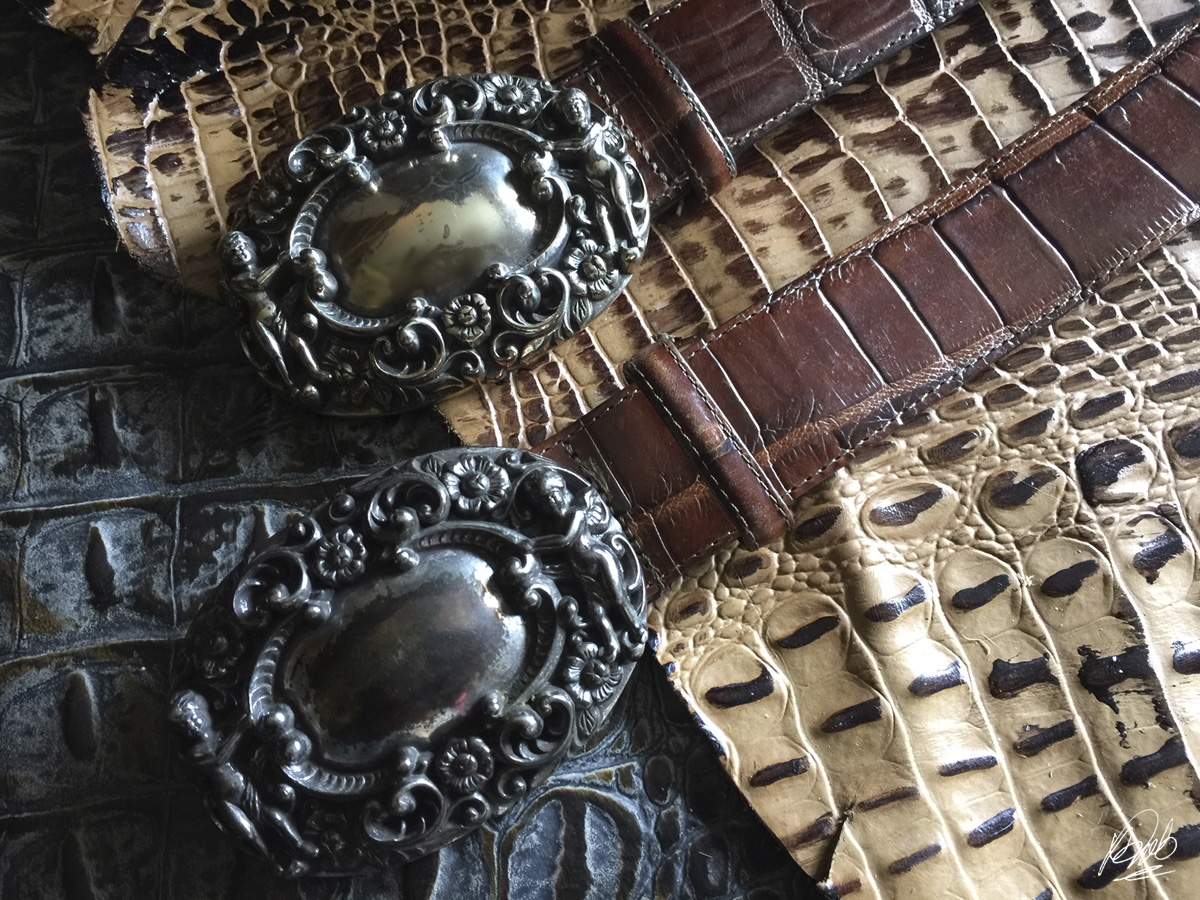
vintage Brighton belts x 2
How many vintage Brighton belts does somebody need? Two, apparently. Like they say in the infomercials, "But wait, there's more!"

It appears when I like something, I really, really like it. Two of the identical belt, two of the same shoes, two of the same boots... My closet is like Noah's Ark, and that's not even counting some of the tack dupes I've found in boxes.

How many mullen mouth Pelham bits does anyone need? Four seems to be the magic number. Fillis stirrup irons? Many, many pair. Granted, it's nice to have a pair ready for whatever saddle I happen to fancy or rehab, but still.

I suppose some of the fashion dupes were acquired because I always keep a "skinny" set and a "fat" set, as I call them. Let's say I really like a certain style of jeans, but my size might go four up or down, depending. Well, I'm prepared: I have a skinny size and a fat size, so I'm never without my favorite jeans.

No, I can't trust myself to stay a certain size.

I've been a skinny size for several years. Before that, a fatter size. Before that, a super skinny size.

Middle age is a killer. When you're young, you can eat salad for a few days and lose 10 pounds. After 55, you're starving a month, gnashing your teeth, and have to bathe in the sacrificial blood of virgins to lose 10 pounds. Even then, all it takes is one night of barbecue and birthday cake before you can't zip your pants for the drive home.

Do I need a size medium and a size large vintage Brighton belt? Probably yes. Do I need size 28 through 32 breeches? Obviously. Even so, some of this stuff has to go.

Commencing the Great Purge of 2018 in 3, 2, 1...

Headsup! Steaming & Shaping Your Western Cowboy Hat

May 21, 2018
•
steaming and shaping western hat

I made a quick 'n' dirty appearance at a local Pinto show with my mom's 2 year old colt as a low-key schooling experience, and lived to tell the tale. Actually, he handled himself like a champ, so all went well.

But... that meant I had to pull some show clothes out of mothballs, including a new western hat waiting to make its debut.

About a thousand years ago, I worked at a tack store and used to shape hats for people. Those skills have been lost in the sands of time, and anymore I'm about as adept shaping hats as a sea bass. For one, I don't have a hat steamer, and two, I flat forgot how.

Fortunately, The Hat Lady was on the grounds, and she expertly transformed my hat to show-ready in a matter of minutes. Thank goodness for small favors, right? Even though the colt and I fairly decimated the in-hand trail course, my hat looked top notch.

If you never knew how to steam and shape a western cowboy hat, or forgot, all kinds of hat pros have shared their hat-shaping secrets on YouTube. Here's a basic primer from the Boot Barn that can be applied any western hat:


Sean Ryon shapes a straw hat (beginning at 4:34):


Big R takes their hat game to next level, including trimming the brim of a felt Stetson, and adding eyelets:


Which brings me to the elephant in the room: the pros use hat steamers. I suppose a really experienced hat shaper could get good results with just about anything, but their weapon of choice certainly appears to be a genuine hat steamer.

Palm leaf hats are a critter all their own - they can be shaped with only water!


I don't think I'm ready to give up a nice felt for a palm leaf yet, just for the convenience of shaping it from the sink. A little more searching lead to alternative ways to shape a palm leaf.


Well, that's all well and good, but I still own exactly zero palm leaf hats, while my closet is teeming with western felt hats, all needing some attention.

So, how much is a hat steamer, and is it worth it to shape your own hats? The DIY part of me says maybe it's practical, especially if you have several hats or show regularly. One could even argue that the convenience of having your own hat steamer might encourage better and more regular hat care, since they truly are investment pieces in your show wardrobe.

The more cautious side of me asks why buy an expensive gadget just to ruin a perfectly good hat, when a professional can do it quickly, inexpensively, and deliver great results? Then again, I'm not known for being cautious. Give me a Sharpie, X-acto knife and a miter saw, and I'm game for anything.

If one was so inclined, had the wherewithall, and was willing to sacrifice a few hats in the learning process, the entry level Jiffy Hat Steamer runs somewhere in the $150 range. The larger professional version adds about $100 to the price. In 10 hats or less, the smaller unit could pay for itself... if you didn't ruin any in the process.

Who's up for shaping their own hats?
 

My Instagram

Copyright © The Brown Rider. Custom template by OddThemes